
Ajayi Crowther University Secures Full Accreditation for Nine Undergraduate Courses
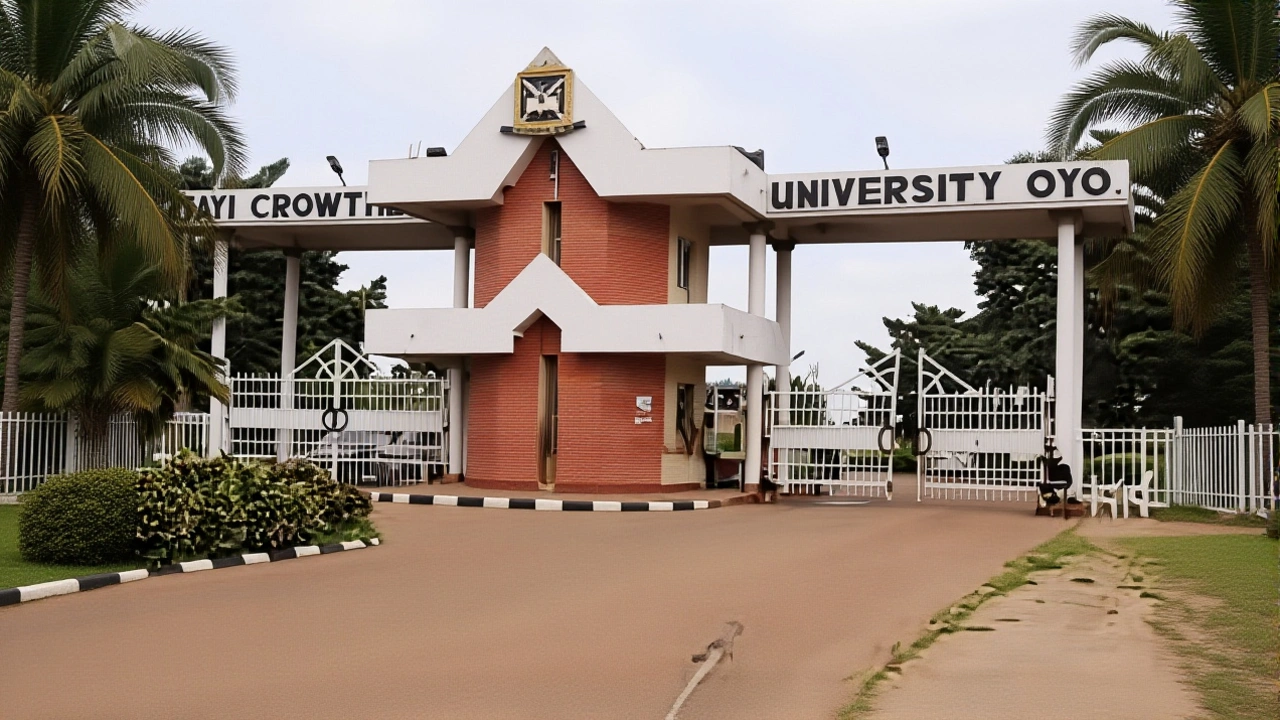
When Ajayi Crowther University (ACU) announced that nine of its undergraduate programmes have just received full accreditation, the reaction on campus was part celebration, part relief. The news, confirmed by the National Universities Commission (NUC), means the university can now market these courses as meeting national quality standards – a boon for prospective students and a feather in the cap of its leadership.
Located along the busy Oyo‑Ogbomosho Expressway in Oyo, Oyo State, ACU was founded by the Church of Nigeria (Anglican Communion) and is headed by Prof. Timothy Adebayo, Vice‑Chancellor. The accreditation visit took place in October and November 2024, and the formal announcement was delivered on behalf of Prof. Abdullahi Ribadu, Executive Secretary of the NUC by Abraham Chundusu, Acting Director of Accreditation at the NUC. "This outcome reflects our commitment to academic excellence and integrity," Prof. Timothy Adebayo said, adding that the achievement would "strengthen our position as a leading institution in the delivery of world‑class education and research."
Background and the Accreditation Process
Under Section 10(1) of the Education (National Minimum Standard and Establishment of Institutions) Act CAP E3, the NUC is empowered to set minimum academic standards and to accredit programmes that meet them. The October‑November 2024 visit involved a team of external examiners who examined curricula, faculty qualifications, laboratory facilities, and student outcomes. After a thorough review, the panel issued a letter confirming that nine programmes satisfied the required benchmarks.
These nine programmes – Nursing, Environmental Health Science, Christian Religious Studies, History and International Studies, Music, Performing Arts, Law, Mathematics, and Statistics – are now officially recognised across Nigeria. The NUC also gave the green light to ACU’s Master of Business Administration (MBA) programme, signalling a broader confidence in the university’s postgraduate offerings.
Accredited Undergraduate Programs at a Glance
- Nursing – 4‑year Bachelor of Science
- Environmental Health Science – 4‑year B.Sc.
- Christian Religious Studies – 4‑year B.A.
- History and International Studies – 4‑year B.A.
- Music – 4‑year B.A.
- Performing Arts – 4‑year B.A.
- Law (LL.B.) – 5‑year programme
- Mathematics – 4‑year B.Sc.
- Statistics – 4‑year B.Sc.
Collectively these courses attract an estimated 2,300 new entrants each academic year, according to the university’s admissions office.
Other Faculties and Emerging Courses
Beyond the accredited list, ACU runs eleven faculties offering a total of more than 30 undergraduate options. The Faculty of Agriculture, created in 2020, now delivers four programmes: Agricultural Economics, Agricultural Extension, Animal Science, and Crop Science. The Faculty of Engineering offers Computer Engineering, Electrical/Electronics Engineering, Mechanical Engineering, and Civil Engineering – each designed to meet Nigeria’s growing demand for skilled technologists.
The Faculty of Management Sciences provides five courses – Accounting, Banking and Finance, Business Administration, Entrepreneurship, and Industrial Relations & Personnel Management – while the Faculty of Basic Medical Sciences houses Environmental Health Science, Medical Laboratory Science, Nursing, and Radiography & Radiation Science.
Environmental Studies students can choose Architecture, Estate Management, Surveying & Geo‑informatics, or Urban & Regional Planning. Arts and Humanities include Christian Studies, Religious Studies (both with tuition concessions), History & International Studies, Music, and Performing Arts. Social Sciences round out the catalogue with Economics, Political Science, and Peace Studies & Conflict Resolution. Additional programmes mentioned in recent prospectuses are Actuarial Science and Biochemistry, though they have yet to receive full accreditation.
Admission Details for the 2024/2025 Session
Applications are now open for the 2024/2025 academic session. Prospects can apply via the Post‑UTME portal or submit Direct Entry forms for the programmes where they meet the required qualifications. Students who listed another university as their first choice on the JAMB portal but wish to switch to ACU must make the change before the portal closes on 15 December 2024.
For queries, the admissions office can be reached at [email protected], on WhatsApp at 08145920637, or by phone at 08104408768. The campus address is: Ajayi Crowther University, Oyo, Along Oyo‑Ogbomosho Expressway, Oyo State, Nigeria.
Implications for Students and Nigerian Higher Education
Full accreditation does more than add a stamp of approval; it unlocks federal funding for research, opens doors for student scholarships, and assures employers that graduates have met nationally recognised standards. For ACU’s current cohort, it means smoother pathways to internships in hospitals, law firms, and media houses that often require proof of programme accreditation.
Education analysts see this as a sign that private, faith‑based institutions can compete with public universities on quality. "The NUC’s rigorous assessment shows that ACU has invested heavily in faculty development and infrastructure," says Dr. Ngozi Okeke, Senior Lecturer in Education Policy at the University of Lagos. She adds that the move could encourage more private universities to seek full accreditation, raising the overall standard of higher education in the country.
Students from the northern regions, where access to accredited programmes is limited, may also benefit. The university’s emphasis on "the fear of God, sound academic development, excellent character formation, hard work, diligence and entrepreneurship" aligns with parental expectations and could boost enrollment from families seeking a values‑based education.
Frequently Asked Questions
Which undergraduate programmes at ACU are now fully accredited?
Nine programmes have received full accreditation: Nursing, Environmental Health Science, Christian Religious Studies, History and International Studies, Music, Performing Arts, Law, Mathematics, and Statistics. These courses can now be advertised as meeting National Universities Commission standards.
How does the accreditation affect tuition fees for the newly approved courses?
Accreditation itself does not automatically change tuition fees, but it allows ACU to qualify for government grants and scholarship schemes that can lower the net cost for students who meet merit or need‑based criteria.
When does the admission window close for the 2024/2025 session?
The Post‑UTME portal closes on 15 December 2024. Applicants who wish to switch from another university must make the change on the JAMB portal before that deadline.
What other programmes are expected to seek accreditation next year?
The university’s leadership has indicated that Actuarial Science and Biochemistry are slated for NUC assessment in early 2025, following recent curriculum upgrades and new laboratory installations.
Why does full accreditation matter for employers?
Employers often require proof that a graduate’s programme complies with national quality standards. Accreditation assures them that the curriculum, teaching staff, and facilities meet the benchmarks set by the NUC, reducing the risk of hiring under‑qualified candidates.


Comments
Neetu Neetu
October 23, 2025 AT 23:18Congrats on the accreditation, because we all needed another stamp of approval 🙄
Jitendra Singh
October 27, 2025 AT 23:31Oh, really??? The NUC actually *did* check the curricula??? Who would have guessed???!
priya sharma
November 1, 2025 AT 00:44The accreditation of nine programmes at Ajayi Crowther University represents a pivotal milestone in the institution's academic trajectory.
According to the National Universities Commission's criteria, full accreditation necessitates demonstrable compliance with curriculum standards, faculty qualifications, and infrastructural adequacy.
This compliance is assessed through rigorous peer‑review processes that benchmark programmes against national and international quality indicators.
Consequently, the accredited courses now possess validated academic rigor, which is essential for maintaining the integrity of the university's credentialing framework.
Moreover, accreditation facilitates eligibility for federal research grants, thereby enhancing the university's capacity for scholarly output.
It also enables graduates to qualify for professional licensure examinations, which is particularly salient for fields such as Nursing and Law.
From an administrative perspective, the accreditation status potentially improves enrollment figures by attracting prospective students who prioritize recognized qualifications.
The statistical projection of 2,300 new entrants underscores the market response to such quality assurance mechanisms.
In addition, the endorsement by a statutory body like the NUC may stimulate partnerships with industry stakeholders seeking competent graduates.
The university's commitment to continuous improvement is further evidenced by its pursuit of accreditation for upcoming programmes such as Actuarial Science and Biochemistry.
It is noteworthy that the accreditation process also scrutinizes pedagogical methodologies, ensuring alignment with contemporary educational paradigms.
Accordingly, faculty development initiatives are likely to be reinforced to sustain the standards achieved.
The ripple effect of accreditation extends to alumni networks, whose credentials gain heightened recognition in the labour market.
In sum, the full accreditation of these nine undergraduate programmes constitutes a multifaceted advancement with implications for academic excellence, research capacity, and socioeconomic impact.
Stakeholders are therefore advised to monitor the ensuing developments as the university leverages this achievement for strategic growth.
Ankit Maurya
November 5, 2025 AT 01:58It's heartening to see a faith‑based institution in Africa rise to meet rigorous standards, proving that quality education knows no borders.
Sagar Monde
November 9, 2025 AT 03:11i think they should also check the labs its not just paperwork
Sharavana Raghavan
November 13, 2025 AT 04:24Sure, because knowing the accreditation process makes you instantly a scholar, right?
Nikhil Shrivastava
November 17, 2025 AT 05:38OMG this is like the biggest drama on campus lol
Aman Kulhara
November 21, 2025 AT 06:51If you’re considering applying, remember to submit your documents early; the deadline is fast approaching; also, double‑check your JAMB scores!
ankur Singh
November 25, 2025 AT 08:04Honestly, this accreditation is just a marketing gimmick, a veneer over systemic issues, and the university should focus on real research output!
Aditya Kulshrestha
November 29, 2025 AT 09:18👍🏼 well done ACU!
Sumit Raj Patni
December 3, 2025 AT 10:31Yo, this is fire! The school just leveled up!
Shalini Bharwaj
December 7, 2025 AT 11:44Stop bragging and start teaching!
Chhaya Pal
December 11, 2025 AT 12:58The news of the nine accredited programs creates a ripple across the campus, stirring a mixture of pride and cautious optimism.
Students who have long awaited official recognition now glimpse a future where their degrees will carry weight beyond the university walls.
Faculty members, having endured the scrutiny of external examiners, can finally breathe a sigh of relief, though many understand the responsibility to maintain those standards.
Administrators are likely to leverage this success in promotional materials, aiming to attract a new wave of applicants hungry for accredited credentials.
Nevertheless, the journey does not end here; continuous quality assurance will be essential to prevent complacency.
Stakeholders in the broader Nigerian higher‑education ecosystem may view this as a signal that private, faith‑based institutions can compete with public universities, potentially reshaping funding priorities.
Alumni networks might also experience an uplift in the perceived value of their qualifications, influencing career trajectories.
In the coming months, we can expect increased inquiries from prospective students, especially from regions where accredited options are scarce.
With the accreditation of programmes like Nursing and Law, professional bodies will likely open more doors for graduates seeking licensure.
At the same time, the university must safeguard the quality of its yet‑to‑be‑accredited courses, such as Actuarial Science and Biochemistry, to sustain the momentum.
This balanced approach will determine whether the current achievement becomes a stepping stone or a fleeting highlight.
Overall, the accreditation marks a definitive step toward academic excellence, yet it also imposes a duty to uphold and expand upon this standard.
Naveen Joshi
December 15, 2025 AT 14:11Congrats to the staff and students; it’s a win for the whole community.
Gaurav Bhujade
December 19, 2025 AT 15:24Keep up the good work; the future looks promising.
Chandrajyoti Singh
December 23, 2025 AT 16:38It is encouraging to observe how accreditation can enhance both academic reputation and student outcomes.
Riya Patil
December 27, 2025 AT 17:51What a triumphant moment for the university!