Bonmatí Makes History with Third Consecutive Ballon d'Or as Barcelona Dominates Women's Football
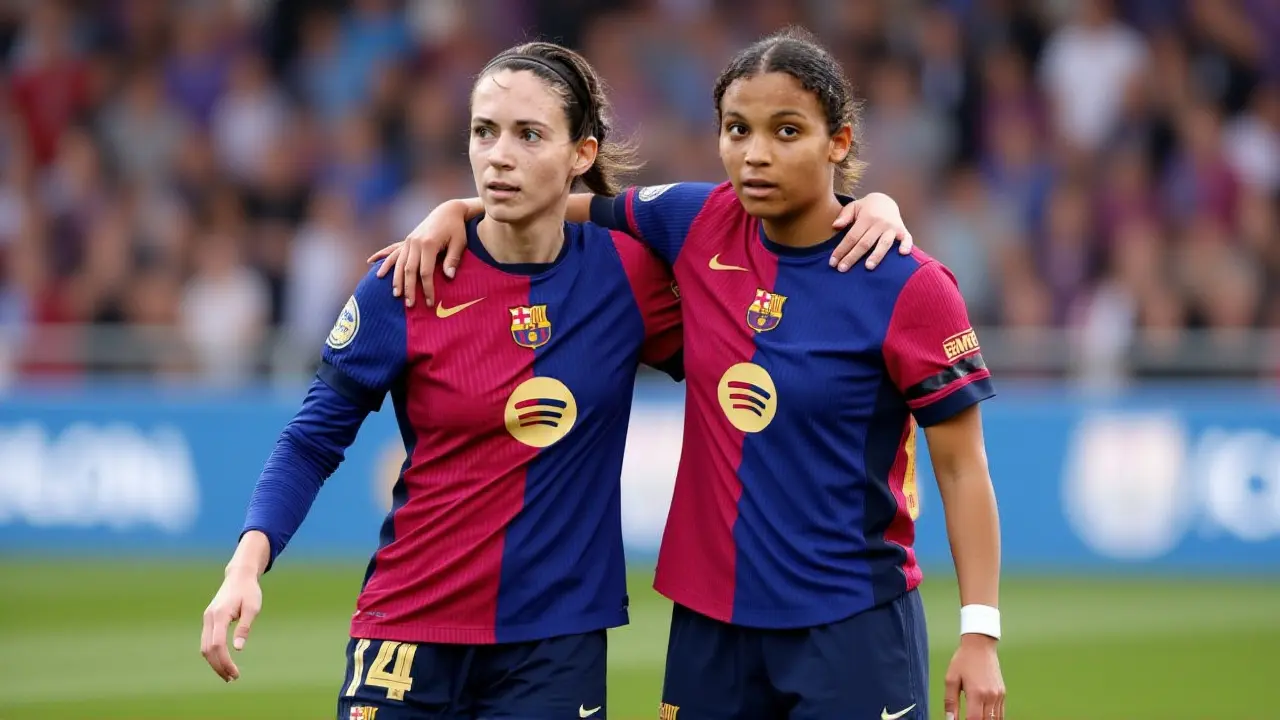
On September 22, 2025, at the Théâtre du Châtelet in Paris, Aitana Bonmatí, the 27-year-old Spanish midfielder for FC Barcelona Femení, etched her name into football history—not just as a great player, but as a trailblazer. She became the first woman ever to win the Ballon d'Or three years in a row, joining an elite club that includes only Lionel Messi, Cristiano Ronaldo, Michel Platini, Johan Cruyff, and Marco van Basten. The win wasn’t just personal; it was a statement. For the fifth straight year, the world’s best player was wearing a Barcelona jersey. And this time, it was Bonmatí, standing just 5-foot-4, holding the trophy higher than ever.
A Legacy Built on Consistency
Bonmatí didn’t just win the 2025 Ballon d’Or—she dominated the season. Across all competitions, she delivered 16 goals and 11 assists, including 4 goals and 5 assists in the UEFA Women’s Champions League, where she was named player of the tournament. Even though Barcelona lost the final 1-0 to Arsenal, her influence was undeniable. She led FC Barcelona Femení to a domestic treble: their sixth consecutive Liga F title, a second straight Copa de la Reina, and a fourth consecutive Supercopa de España Femenina. Statistically, she ranked fifth in the UWCL for ball recoveries (63) and joint fifth in Liga F for goal contributions (12 goals, 6 assists), proving she wasn’t just a scorer but the engine of Barcelona’s relentless counter-pressing system.
Her impact extended beyond club football. In the Euro 2025 semifinals, she scored a last-minute winner against Germany, dragging Spain into their first-ever Women’s Euros final. They lost 1-0 to England, but Bonmatí’s performance under pressure became the stuff of legend. "I could not have achieved this on my own," she said in her acceptance speech, delivered primarily in Catalan. "Thanks to Barça for giving me everything. I have spent fourteen years at the club of my life, and I hope to wear this badge on my chest for many more years."
A New Era for Young Talent
While Bonmatí stood atop the podium, the ceremony also spotlighted the future. Enter Vicky López, the 19-year-old Spanish winger, who became the inaugural winner of the women’s Kopa Trophy. In 33 appearances, she scored 11 goals and added 3 assists, helping Barcelona complete the domestic treble and reaching the Euro 2025 final with Spain. Her rise mirrors Bonmatí’s own trajectory—both came through La Masia, both play with the same intelligent, tireless style. López didn’t just win an award; she signaled that Barcelona’s pipeline of elite female talent isn’t slowing down.
Meanwhile, Lamine Yamal, the 18-year-old Spanish sensation on Barcelona’s men’s team, made history of his own—becoming the first player to win the Kopa Trophy twice in a row. With 18 goals and 25 assists in 55 appearances, he led Barcelona to a men’s domestic treble, further cementing the club’s dominance across both genders. His back-to-back wins underscore a broader truth: Barcelona isn’t just winning trophies; they’re cultivating generational talent.
Barcelona’s Unmatched Dynasty
Since 2021, FC Barcelona Femení has had the Ballon d’Or winner every single year. Alexia Putellas won in 2021 and 2022. Then came Bonmatí—three in a row. That’s five consecutive years of the world’s best player wearing a Barcelona shirt. Of the seven Women’s Ballon d’Or awards ever given, five have gone to Barcelona players. Only Ada Hegerberg (2018) and Megan Rapinoe (2019) broke the streak. This isn’t luck. It’s infrastructure. It’s coaching. It’s investment. And it’s culture.
Other Barcelona names echoed through the nominations: Putellas (fourth), Caroline Graham Hansen, Patri Guijarro, Ewa Pajor, and Claudia Pina. Bonmatí was also named to FIFA’s The Best Women’s XI alongside teammates Ona Batlle, Putellas, Guijarro, Pina, and Irene Paredes. The depth is staggering. When you have six players from one club on the world’s best XI, you’re not just a team—you’re a movement.
Equality, Finally, on Display
Bonmatí didn’t just win the award—she celebrated the moment as a milestone for gender equality. "This is the equality we have been demanding," she said, her voice steady. "And it is very positive." For the third year in a row, women received identical prize money and equal billing at the Ballon d’Or ceremony. No more "Women’s Ballon d’Or" as a side event. No more smaller trophies or later slots. The stage was shared. The spotlight was the same. That shift didn’t happen by accident. It was fought for—by players, by fans, by journalists who refused to accept less.
And then, on December 16, 2025, came the final confirmation: Bonmatí won FIFA’s Best Women’s Player award for the third straight year. FIFA’s official tweet captured it perfectly: "First time was so nice, she had to do it thrice." It wasn’t just a repeat. It was a coronation.
What Comes Next?
Bonmatí’s next challenge? Staying healthy. At 27, she’s entering the prime years—but the physical toll of playing 50+ matches a season, year after year, is real. Can she extend this run into 2026? Can Barcelona keep producing players like López and Yamal to carry the torch? And will other clubs finally match Barcelona’s investment in women’s football—or will they keep playing catch-up?
One thing is certain: the game has changed. Bonmatí didn’t just win three Ballons d’Or. She redefined what’s possible for women in football. And for the first time, the world is watching—not because she’s "the best woman," but because she’s the best, period.
Frequently Asked Questions
How many women have won the Ballon d'Or three times before Bonmatí?
No woman had ever won the Ballon d'Or three times before Aitana Bonmatí. She is the first, joining only five players in history with three or more wins: Lionel Messi, Cristiano Ronaldo, Michel Platini, Johan Cruyff, and Marco van Basten. Her achievement places her among the most decorated players of all time, regardless of gender.
Why is Barcelona so dominant in women’s football?
Barcelona’s dominance stems from long-term investment in La Masia’s women’s academy, professional coaching structures, and equal pay policies introduced in 2021. They’ve built a culture where female players train alongside men’s youth teams, receive top medical support, and are marketed as global stars. Five of the seven Women’s Ballon d’Or awards have gone to their players, a level of consistency unmatched by any other club.
What does Vicky López’s Kopa Trophy win mean for young female players?
López’s win as the first recipient of the women’s Kopa Trophy signals that youth talent in women’s football is now being formally recognized at the highest level. At 19, she’s already a key contributor to a historic team, proving that elite development pathways exist—and that young players can ascend quickly. Her success offers a roadmap for girls worldwide: if you’re talented and disciplined, you can rise to the top, just like Bonmatí did before you.
How does Bonmatí’s win compare to Messi and Ronaldo’s Ballon d’Or runs?
Bonmatí’s three consecutive wins match the achievement of Messi (2009–2012, 2015, 2019) and Ronaldo (2008, 2013–2014, 2016–2017), but she did it in a much shorter timeframe for women’s football. While Messi and Ronaldo dominated over decades, Bonmatí achieved this in just three years during a period of rapid growth for the women’s game. Her consistency under increasing global scrutiny makes her feat even more remarkable.
Did Bonmatí’s win impact prize money for women’s football?
Yes. For the third consecutive year, the Ballon d’Or ceremony awarded equal prize money to men and women, a direct result of sustained advocacy by players like Bonmatí. In 2025, both the men’s and women’s winners received €1.2 million. This parity, once unthinkable, is now institutionalized—a major victory for gender equity in sports.
What’s next for FC Barcelona Femení after Bonmatí’s historic run?
Barcelona’s focus is now on sustaining dominance through youth development. Players like Vicky López, 17-year-old midfielder Salma Paralluelo, and 18-year-old goalkeeper Lucía García are being groomed as successors. The club is also expanding its women’s training facilities and increasing international friendlies to maintain competitive edge. Their goal: keep the Ballon d’Or in Barcelona for another five years.